Location-based Mobile Game
How might we reframe long wait times as a game where everybody wins?
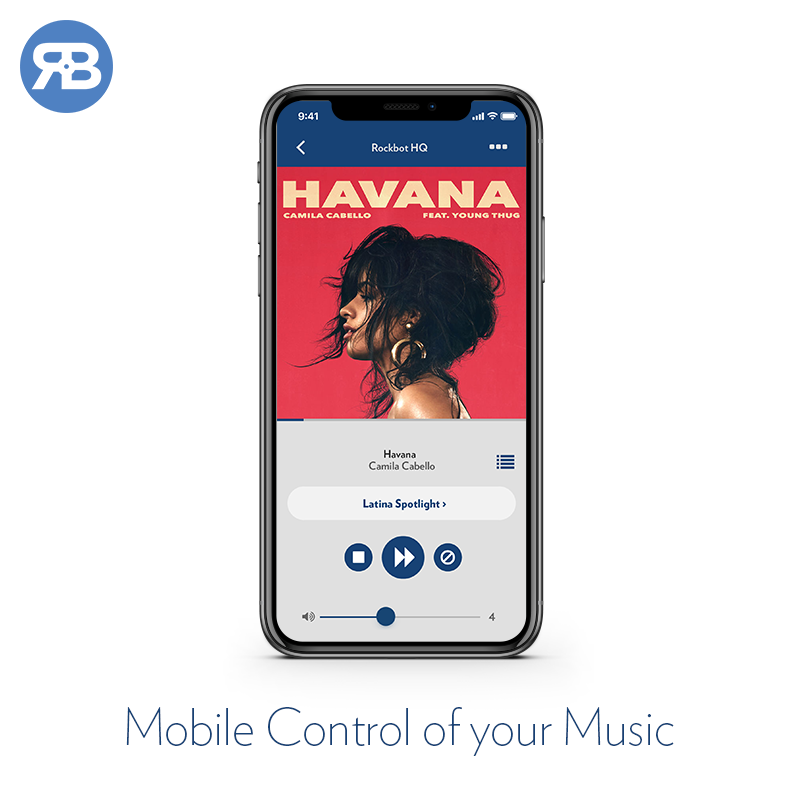
Rockbot is a music streaming service for businesses to manage custom playlists and license the background music. I designed Rockbot's mobile song request so that customers would engage with the background music at their favorite restaurant, bar, gym... or airport.
Rockbot, 2017
The Problem
To improve a disappointing experience during peak demand.
The business goal of the app was to increase customer engagement. But when we looked at the numbers we found that some of our highest performing venues were also the most disastified with the service.
Digging deeper, it was clear that at peak times a small number of power users were responsible for over 90% of the song requests. As wait times became impossibly long, the user experience appeared to be falling apart.
The original business assumption was that as engagement increased, the supply & demand dynamics would make song requests more appealing and customers would pay more for premium picks. As it turned out, a few power users were dominating the service, which left the majority of customers displaced and discouraged.
Scope: 6 weeks to design a new mobile multiplayer game as a native iOS and android app.
Role: I led all design as individual contributor.
Team: Myself, a visual designer, and 4 developers.
Type: UX, Motion design, prototyping, design thinking
Tools: Sketch, HTML, JS
The Solution
To create a compelling new game that makes use of long wait time .
Before diving into product design, I led a one week design sprint to create alignment across teams so that we could get together and make sure we were focused on solving the right problem. One possible solution was to double-down on the current model and roll out surge pricing for song requests to kill long queue times during peak demand hours. This solution would be straight-forward to implement and would have the added bonus of potentially increaseing revenue. But would it solve the problem that matters most?
I reached out to key stakeholders to help me reframe the problem. The team had built the product to do one thing— increase engagement. It was possible that we had too much of a good thing. But maybe there was an opportuntity to design a new product that could flip a pain point into a big win?
We decided we wanted to try to empower customers who were previously sidelined by using voting. We would focus on a new design that aimed to increase the voting interactions as a key outcome. Customers would be motivated to pick crowd pleasers that would get more and more votes to bump them up in the queue. If it all worked out, when wait times were long and the business was busy— everyone could have a stake in the music. They could focus on voting to crown the next winner, even if all of their individual song requests might not be played.
Even though we weren't sure exactly what to build, we were aligned on the problem we wanted to solve. We envisioned what success would look like and how we would measure it. At the end of the week we came up with a rough prototype for a new event where participants would both pick songs and vote to crown a winner.
Implementation
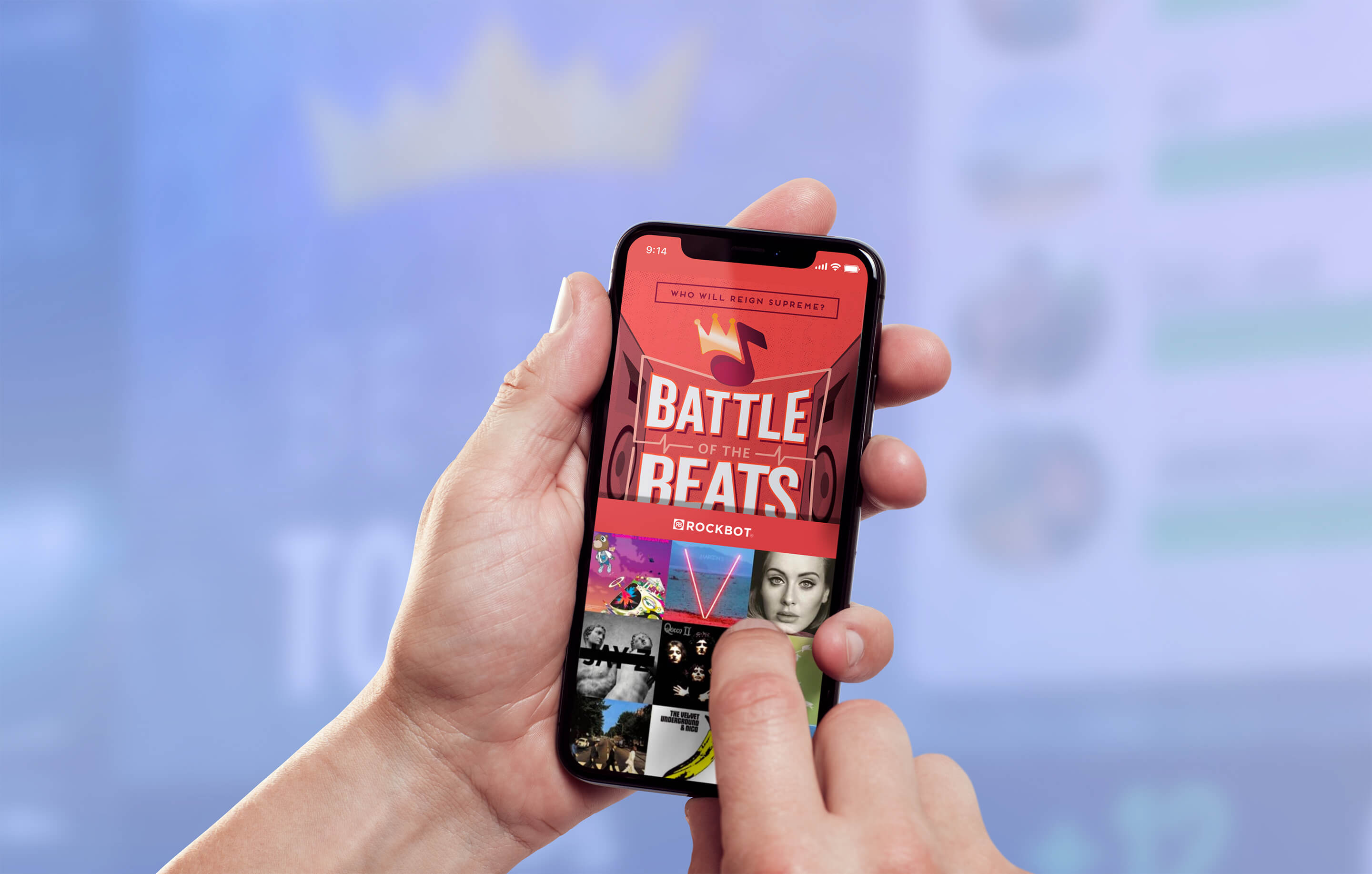
With the company aligned on a clear problem, it was easy for me to work with the product team to quickly build a prototype of the new game. I spent two weeks pairing with developers from both the app development team and set top box display team and by the end of the second week we had a working prototype. The core idea was to divide the competition into a series of rounds that built up to a one on one face-off, with a new winner crowned each week.
There were a number of details to work out, including: interactions to inform customers that the game had started, new interactions for competitors who didn't make to switch gears to voting to crown the winner, and transitions to set up a new game and clear the song queue each round.
To quickly test the prototype I had everyone at HQ download the latest testfilght app and we ran the game every afternoon for the third week. Along the way, we tweaked the game mechanics and iterated on the design and deployed a new test flight iteration each day. At the same time, I reached out to the customer success team so that they could reach out to high performing venues about the new game and identify good candidates to start with when we were ready to roll the game out. By the end of the fourth week, we soft launched the new game at a dozen of our highest engagement venues.
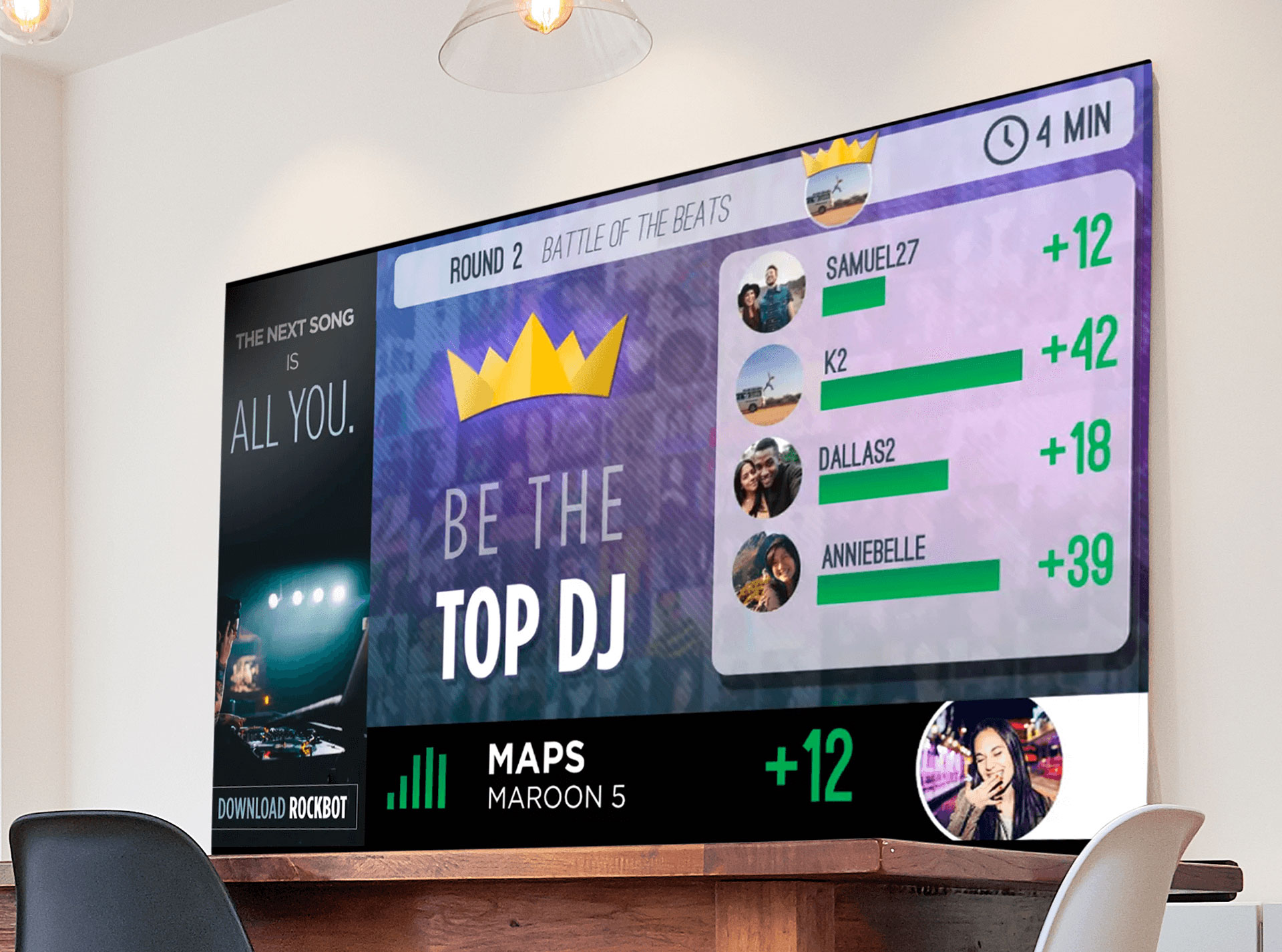
We tested the game in HQ each day, before rolling out to select venues.
Outcome
Because the team was aligned on a problem and outcome, it was easy for us to evaluate the impact during rollout. As expected, the total number of song requests went down a bit— previously, more there were more requests than time allowed. On the other hand, voting increased by over 10x and the number of accounts that were active increased by more than 5x. Battle of the Beats became a popular self-running alternative to weekly events for businesses and transformed a painful context of use into a customer-favorite experience.
More Case Studies